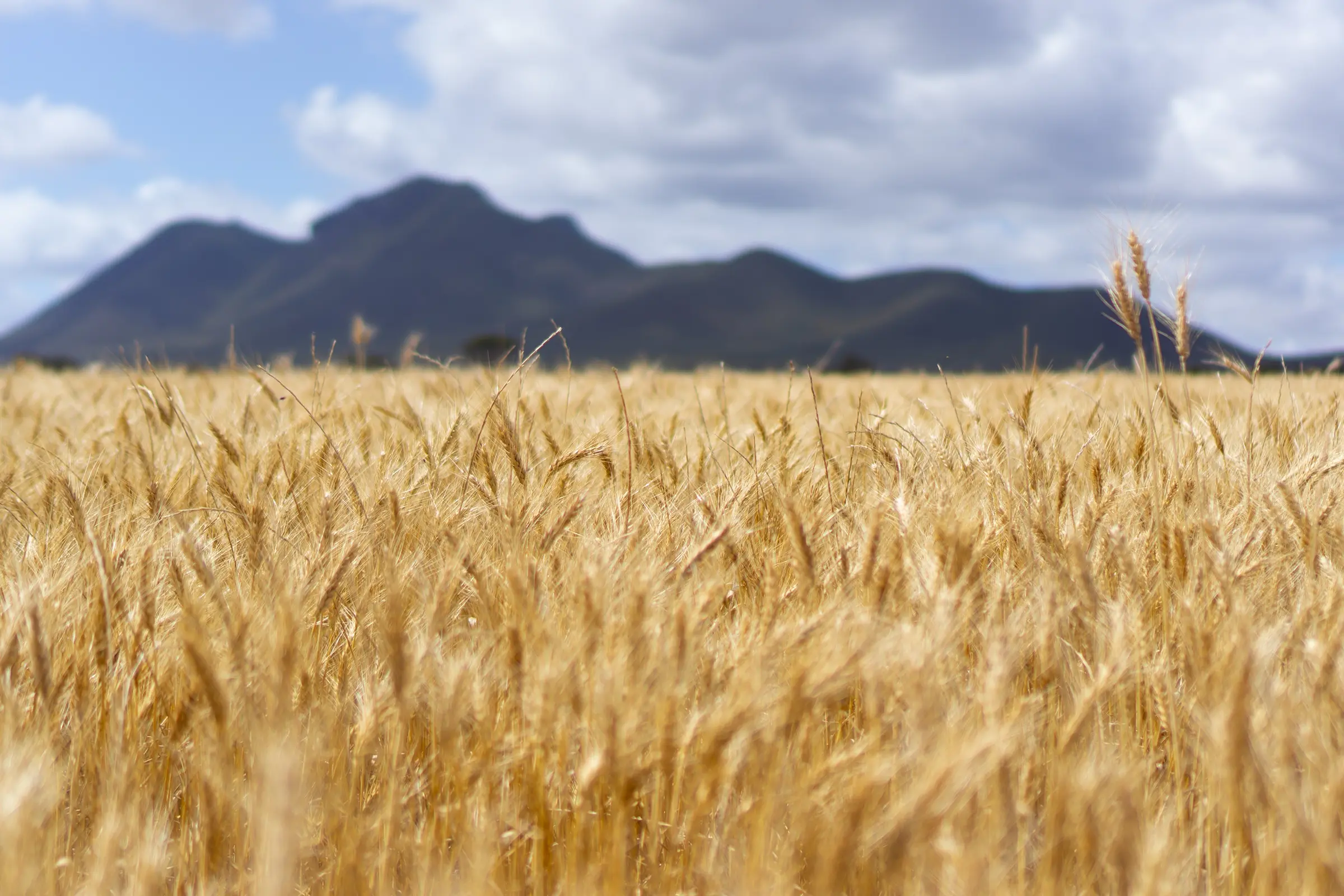
Agricultural investing is gaining attention as a powerful climate cycle approaches its seasonal peak. A strong El Niño can disrupt rainfall, crop yields and supply chains across major producing regions. For investors, that may create opportunities across grains, oilseeds, soft commodities and the businesses that help farmers manage water, crop productivity and weather risk. It also calls for selectivity: weather patterns are unpredictable, commodity prices are volatile and strong headline production can conceal significant regional differences.
Key takeaways
- Agricultural investing can provide portfolio diversification when weather, inflation and supply constraints affect traditional assets differently.
- The current El Niño is expected to be strong to very strong, but its strength does not reliably predict the size or location of its Australian impact.
- Global crop risks may support prices for wheat, sugar, corn, soy, cocoa and coffee where drought or excessive rain reduces production.
- Australia enters this period with a relatively strong winter crop base, although production is forecast to decline and seasonal conditions vary sharply by region.
- The opportunity extends beyond commodities to grain handling, rural services, crop protection, animal feed, water management and precision agriculture.
Why agriculture belongs in the megatrend conversation
Agriculture sits at the intersection of climate variability, food security, water availability, changing trade routes, input costs and the need to produce more efficiently. These forces influence how farms invest and how governments respond to food-price inflation.
El Niño can amplify them. It often brings drier winter and spring conditions to parts of Australia, although other climate drivers can strengthen or weaken its influence. A modest reduction in output from an important exporter can tighten supply and change price expectations before final harvest data is available.
How El Niño could affect agricultural markets
The main transmission channel is likely to be commodity price inflation. Weather-related production losses could place upward pressure on wheat, sugar, corn, soy, cocoa and coffee. Higher temperatures may also affect livestock, while lower rainfall can constrain water supplies, hydropower and important shipping routes.
The effects will not be uniform. El Niño can produce drought in one region and excessive rain in another. A crop shortfall may also be offset by strong production elsewhere, existing inventories or changes in demand.
The investment case therefore extends beyond direct commodity exposure. Businesses involved in precision agriculture, water management and crop protection may benefit from greater spending on resilience. Grain handlers can be influenced by receival volumes, exports and trading margins, while feed producers may experience different demand conditions during dry periods.
Australia starts from a position of relative strength
The Australian outlook is more nuanced than a simple drought narrative. National winter crop production is forecast at 61 million tonnes in 2026–27, down 12% from the prior year but 16% above the 10-year average and potentially the fourth-largest crop on record. The forecast was upgraded by 12% from June after better-than-expected winter rainfall across major southern growing regions.
The upgrade demonstrates how quickly seasonal expectations can change. Crops in South Australia and Victoria were running three to four weeks early, while conditions remained weaker in northern New South Wales and Queensland. The analysis suggests the forecast may still prove conservative if favourable conditions continue into harvest.
Wheat, barley and canola production are each forecast to decline, while lentil production may reach a record and chickpea production is expected to fall sharply. Summer production faces greater pressure, with low soil moisture and irrigation availability weighing on sorghum and cotton.
For investors, this creates a two-sided picture. Australia may remain a significant and relatively reliable exporter while lower production in some global regions supports selected commodity prices. At the same time, a strong national total can mask substantial differences between crops, states and individual businesses.
The Western Australian position
Western Australian winter crop production is forecast to decrease 16% to 22.8 million tonnes in 2026–27, although that would remain 18% above the 10-year average. Lower rainfall is expected to reduce yields, particularly in the Albany and Great Southern regions, where timely in-crop rainfall remained important.
Western Australian wheat production is forecast at 10 million tonnes, barley at 6.8 million tonnes and canola at 4 million tonnes. Wheat production is expected to fall materially, while barley production is forecast to rise.
For investors, these differences reinforce the value of looking below national headlines. The effects can flow through farm income, grain receivals, input demand, transport volumes and regional business activity.
From crop forecasts to listed investment exposures
The upgraded crop outlook has different implications across the value chain. Higher east-coast production may support grain receivals, exports and crush activity. Better seasonal conditions can also support crop protection and rural services, although costs and regional dryness remain important counterweights.
- Grain handling and processing: Higher receivals and exports can support storage, logistics and processing, while grain prices can influence trading and crush margins.
- Crop protection and seeds: Better rainfall can improve sales conditions, while global diversification may reduce reliance on one season.
- Rural services and animal feed: Strong cropping and livestock activity can support demand, while dry conditions may increase supplementary feeding. Fuel, grain costs and biosecurity remain risks.
Investors should assess each company’s specific earnings drivers rather than assuming every agricultural business benefits from the same environment.
Supply risks extend beyond the weather
El Niño is only one part of the opportunity. Geopolitical events, freight disruption, energy prices and fertiliser costs can be equally important.
Black Sea port operations are expected to be a major driver of 2027 grain prices. One scenario suggests global wheat prices could trade around current levels if ports reopen in early 2027, but could trade 18% to 24% higher if they remain closed. Global canola stocks are also forecast to decline 7.3% in 2026–27, while biofuel demand continues to support the market.
The Australian research analysis similarly notes that Black Sea tensions, lower European wheat crops and buying by Asian customers seeking supply certainty may support Australian grain competitiveness and trading conditions.
Agricultural investing should not rely on a single forecast. Weather, conflict, transport capacity, energy, currencies and policy can reinforce or offset one another. Diversification across commodities, regions and business models can help reduce dependence on one outcome.
How investors can approach the theme
Morgans does not advise on or deal in soft commodities directly. For investors, exposure to the theme is typically gained through listed companies across the agricultural value chain, such as grain handlers, crop protection and seed businesses, and rural services providers, or through exchange-traded funds (ETFs) that invest in agribusiness. This note discusses the broader theme rather than specific securities, which your adviser can discuss in the context of your portfolio.
A sensible approach begins with the role agriculture is intended to play in the overall portfolio.
- Define the objective. Decide whether the allocation is intended to diversify a traditional portfolio, provide some inflation sensitivity or participate in long-term investment in agricultural resilience.
- Choose the exposure carefully. Listed agribusinesses, grain handlers, rural services providers, agricultural technology businesses and agriculture-focused ETFs respond to different drivers.
- Diversify across the value chain. Avoid relying solely on one commodity, region, company or weather outcome.
- Monitor the evidence. Follow rainfall outlooks, crop forecasts, global inventories, trade routes and input costs rather than reacting only to headlines.
- Size the allocation appropriately. Commodity-linked investments can move sharply as forecasts change, so the exposure should fit the investor’s risk tolerance, liquidity needs and broader strategy.
For investors, the theme may complement real-asset and inflation-aware allocations. Agricultural exposure should be considered as an investment providing diversification.
Explore More Insights from Scott Fraser
This article is part of a broader collection of insights from Scott Fraser, covering a wide range of financial planning and investment topics.
Visit Scott’s page to read more articles, learn about his experience and approach, and choose whether you would like to connect with Scott via email or book in a meeting.
Frequently asked questions
What is agricultural investing?
Agricultural investing provides exposure to the agricultural sector, including grains, oilseeds and soft commodities, typically through listed companies and ETFs involved in production, storage, processing and distribution. The appropriate method depends on the investor’s objectives, experience and tolerance for price volatility.
Why can El Niño create an investment opportunity?
El Niño can disrupt rainfall and reduce crop production in important exporting regions, potentially tightening supply and supporting prices. The opportunity is uncertain because each event is different and other climate drivers can strengthen or weaken its effects.
Which commodities may be most affected?
Wheat, sugar, corn, soy, cocoa and coffee may face upward price pressure from weather-related production losses. Local supply, inventories, consumer demand and trade disruptions will influence the outcome for each commodity.
Is Australian agriculture expected to have a poor year?
Not overall. Winter crop production is forecast to remain well above the 10-year average despite a year-on-year decline, but conditions differ considerably across regions and the summer crop outlook is weaker.
Do higher crop forecasts benefit every agricultural company?
No. Higher production may support grain handling, exports and some farm-input sales, but results also depend on commodity prices, margins, costs, geographic exposure and company execution.
Does agricultural investing protect against inflation?
Commodities can provide inflation sensitivity and diversification because their performance may differ from equities and bonds. That relationship is not guaranteed, so exposure should be assessed within the whole portfolio.
A long-term theme, not a one-season trade
El Niño may be the immediate catalyst, but the more durable investment case rests on food security, efficient water use, resilient supply chains and improved agricultural productivity. Current crop conditions and global supply risks support a selective approach rather than a broad assumption that every commodity or agricultural company will benefit.