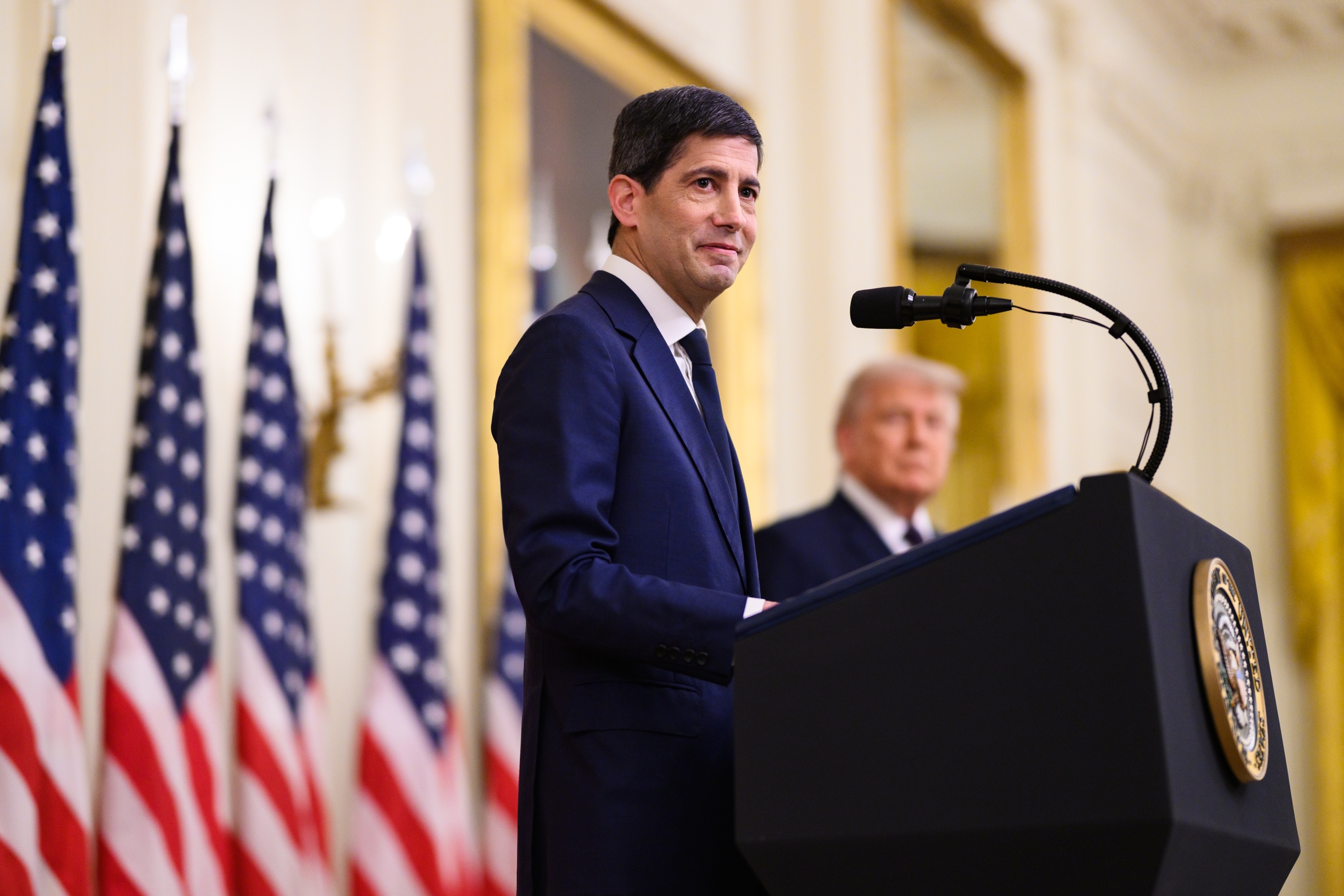
Today, we had the second meeting of the Federal Reserve overseen as Fed Chair by Kevin Warsh. The result of this meeting was that the Fed left the effective Fed Funds rate unchanged at 3.6%. Still, three of the twelve members of the Federal Open Market Committee voted for a rate hike.
Warsh talked about building the Fed's information systems, saying the Fed can learn more from markets, particularly the bond market, than the bond market can learn from the Fed.
Bond markets react to real time events, so it's the Fed that should be learning from the bond market, not the other way around. He referred to the bond market as "a very accomplished economist," very familiar with the internals of financial markets.
Warsh said the Fed is looking closely at its sources of data, not just the data it has, but the data it wishes it had. He said financial markets are a very good source of information.
He also touched on bond yields rising, suggesting this wasn't down to rising inflation but to strong investment in the US economy. That's what's been happening today.
What we want to look at is the longer term strategy Kevin Warsh has brought to the Federal Reserve. For a number of years, Warsh has argued that the Fed needs to reduce the size of its balance sheet. He believes the balance sheet's size, and the Fed's record of financing a large share of government activity, effectively acts as a permission slip for more government spending.
If there was downward pressure on the balance sheet, he argues, there would be more fiscal discipline in government, and the debt to GDP ratio in the US would start to decline instead of continuing to rise.
To illustrate this, we're showing a couple of charts from the Federal Reserve database on the history of the Fed's balance sheet.
.png)
The first chart covers 2004 to 2016. This is a period when a lot happened. The shaded area on the left marks the Global Financial Crisis of 2007 to 08. Kevin Warsh joined the Federal Reserve Board in 2006, having previously worked at the White House, and served at the Fed until 2011, so he was there right through the crisis.
When he joined, the Fed balance sheet stood at around $0.78 trillion (US$780 billion), the lowest level it would reach over the period we're covering. During the financial crisis, in order to recapitalise US banks, the balance sheet expanded rapidly from $0.78 trillion to $2 trillion.
It then moved sideways before crawling up to around $3 trillion by 2013, a period that also took in the European financial crisis. It continued rising into 2016, reaching $4.5 trillion, between six and seven times its level when Warsh first joined the board.
.png)
From there it declined, falling to $3.8 trillion by 2019, just before the pandemic. The pandemic then triggered a dramatic expansion: the balance sheet rose from $3.8 trillion to $7 trillion in the first year alone, peaking at $9 trillion in 2022, around twelve times its level when Warsh first joined. Since then the Fed balance sheet has declined, falling from $9 trillion in 2022 to about $6.5 trillion at the start of this year. This year, though, it's been climbing again, back up to around $6.7 trillion.
The issue is that this expansion amounts to quantitative easing, genuine stimulus to the economy. So the question Warsh appears to be posing is this: to tighten monetary policy, should the Fed raise the Fed Funds rate, or should it instead pursue quantitative tightening, letting the asset base run down?
In practice, quantitative tightening works like this: as banks buy more Treasury bills and bonds from the Fed, the proportion of their assets allocated to corporate bonds declines, meaning less money flows to the corporate sector. That's how quantitative tightening is generated.
The other strand of what Warsh is doing is improving the Fed's information systems and drawing more insight from financial markets. The Fed should be learning about the economy from financial markets. Financial markets should not be learning from the Fed.
What I think he's also signalling is that the Fed could return more of its debt to financial markets through quantitative tightening, rather than raising the Fed Funds rate in this cycle.
Want to discuss how this impacts your portfolio?
DISCLAIMER: Information is of a general nature only. Before making any financial decisions, you should consult with an experienced professional to obtain advice specific to your circumstances.
.jpg)
.jpg)