Listen to Dianne Colledge on Money News with Scott Haywood
Dianne Colledge, private client adviser at Morgans, joined Scott Haywood on Money News on Tuesday 29 September 2026. Listen to the full episode below.
Key takeaways
- Interest rate rises affect the share market most when they surprise investors. The RBA's September 2026 hike to 4.60% was widely expected, so the ASX 200 still closed 0.34% higher.
- The tone of the RBA Governor's media conference moved shares more than the decision itself, with a sharp rally in the final 30 minutes of trade.
- Rate rises hit sectors differently. Retailers and property feel pressure first, while banks and technology can respond to other drivers.
- Company events such as class actions and CEO departures can move a share price quickly, but the long-term impact depends on the fundamentals.
- A diversified portfolio and a clear plan help investors look past the headline and avoid reacting to short-term noise.
When the Reserve Bank of Australia (RBA) lifts the cash rate, many investors expect the share market to fall. So how do interest rate rises affect the share market in practice? On 29 September 2026, the RBA raised rates for the fourth time this year, yet the ASX finished the day in positive territory.
Morgans Private Client Adviser Dianne Colledge unpacked the day's trading on Money News with Scott Haywood. This guide draws on her insights to explain why markets react the way they do, which sectors are most exposed, and what investors can do next.
What happened when the RBA raised rates in September 2026?
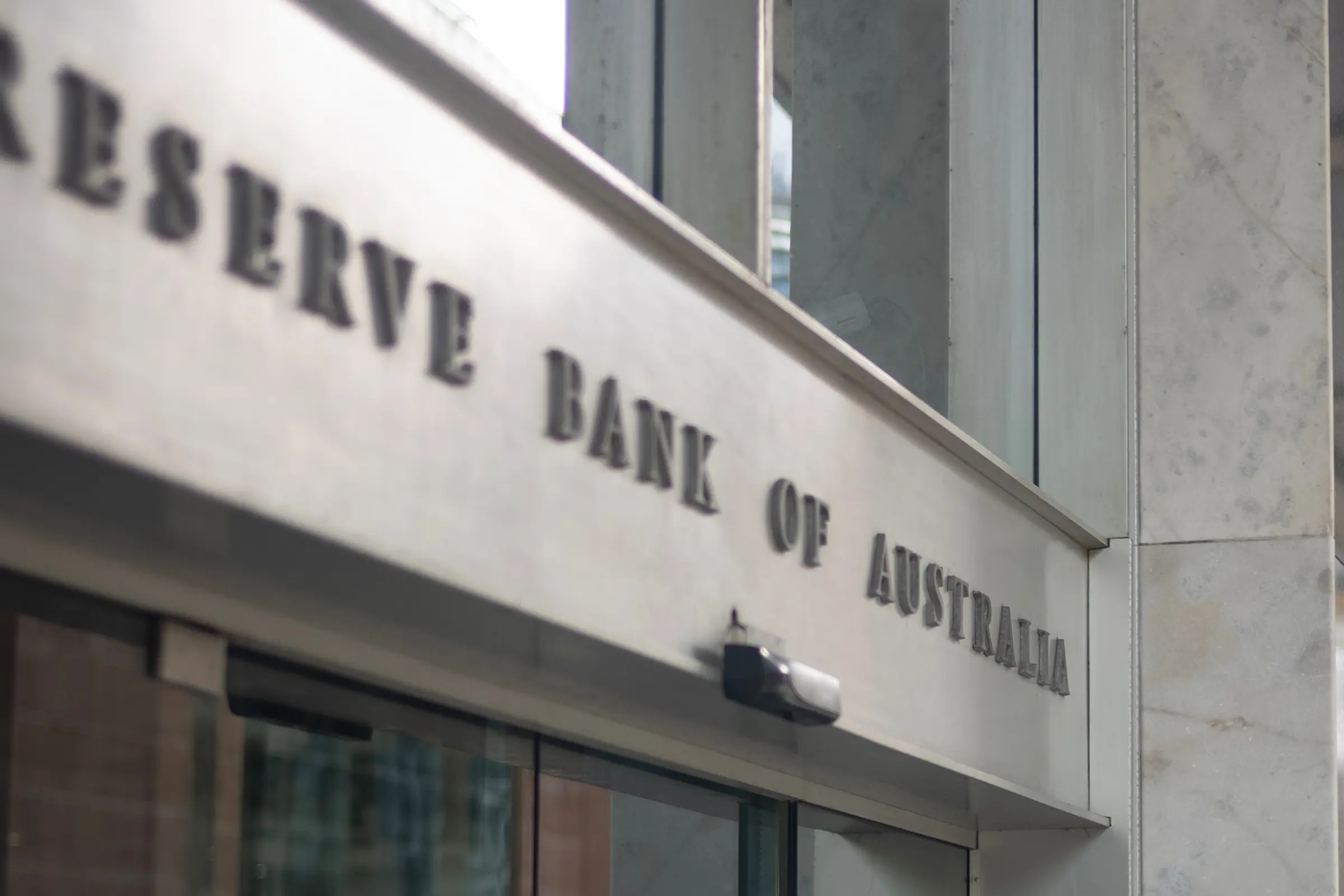
The RBA lifted the cash rate by 25 basis points to 4.60% on 29 September 2026. It was the fourth increase of the year, following hikes in February, March and May, and took the cash rate to its highest level since November 2011. The Monetary Policy Board voted unanimously and said it could raise rates further if needed.
The RBA pointed to inflation that remains above its 2 to 3% target band. Higher global energy prices linked to conflict in the Middle East and strong demand tied to the artificial intelligence (AI) investment boom are adding to price pressures.
Why didn't the share market fall after the rate rise?
The share market barely reacted because the rate rise was already priced in. Share prices reflect what investors expect to happen, not just what has happened. When a decision is widely forecast, most of its impact shows up in prices in the days and weeks before the announcement.
Ahead of the September meeting, markets had priced in a very high chance of a hike and the major banks had all forecast one. "Most of my clients knew that this was coming, like the rest of the market," says Dianne. "That's why we didn't see much of a reaction after the announcement."
This is a useful lesson for investors. The question is rarely "did rates go up?" It is "did rates move more or less than expected, and what does the RBA signal about the path ahead?"
How the RBA Governor's tone moved the market
The biggest move came after the decision, not at it. The RBA announces its decision at 2.30pm and the Governor holds a media conference at 3.30pm. The ASX 200 dipped into the red after the announcement, then staged a sharp recovery in the last 30 minutes of trade.
Dianne describes the Governor's message as "be alert, but not alarmed". Investors took comfort from that measured tone and bought back into the market before the close.
- Banks regained much of what they had lost earlier in the session.
- Retailers such as Wesfarmers and Woolworths recovered well.
- Technology led the day, with Codan up 23.9% after a strong trading update and Megaport up 9.4% after securing new AI infrastructure contracts.
"Where there was any impact from the rate announcement, it was very quickly recovered in that last 30 minutes," Dianne says. Forward guidance, or what a central bank says about future moves, can matter as much to investors as the rate decision itself.
How do interest rate rises affect different sectors?
Interest rate rises affect sectors in different ways, depending on how much a business relies on borrowing, consumer spending or future growth. Higher rates increase the cost of debt, reduce household spending money and lower the value investors place on earnings expected far into the future.
The table shows why broad rules only go so far. On the same day as a rate rise, strong company news lifted technology shares far more than rates held them back.
Do share prices recover after a class action?
Share prices often recover after a class action is announced, because much of the bad news is usually already reflected in the price. A class action tends to follow an earlier event, such as a profit downgrade, that has already hit the shares.
Cochlear is a recent example. On 29 September 2026, the hearing implant maker confirmed it faces a shareholder class action in the Supreme Court of Victoria. The claim relates to its FY26 profit forecast and covers investors who bought shares between 15 August 2025 and 21 April 2026. Cochlear denies the allegations and says it will defend the proceedings.
The shares fell as much as 2.4% on the news, a modest move compared with the 40.7% fall that followed the company's profit downgrade in April (Reuters via WSAU). Cochlear also recovered from its lows as the wider market rallied late in the day.
"Class actions are quite common," says Dianne. "We've seen them against companies such as Woolworths and Wesfarmers, and the banks have had multiple class actions. They do tend to recover quite quickly after the initial shock."
What investors should look at instead
- Whether the underlying business and earnings outlook have changed
- The potential size of any settlement compared with the company's balance sheet
- Any change to management, guidance or disclosure practices
- How much of the stock sits in your portfolio, especially if it is also held in your super
Are data centres a risk or an opportunity for investors?
Data centres are both a major infrastructure opportunity and a growing source of community pushback. Investors need to weigh the long-term demand for AI and cloud computing against planning, regulatory and social licence risks.
Goodman Group showed the risk side in September 2026. It withdrew plans for a $1.2 billion, 90 megawatt data centre in Sydney's Lane Cove, which would have sat about 20 metres from the nearest home. Residents had raised concerns about noise, power and water use, and Goodman cited changing federal and state policy (Capital Brief). Data centres make up close to 80% of Goodman's development work in progress, so the decision was closely watched.
Dianne believes this is something investors need to be aware of. "We see multitudes of data centres being rejected in the US, particularly in states such as New York and California," she says. "We will possibly see a similar scenario here in Australia."
She also sees the bigger picture. "If you think about data centres as a major infrastructure play, it is positive for society, because we're all using the data these centres produce."
Data centres at a glance
What does a CEO resignation mean for a share price?
A CEO resignation can knock a share price, especially when it is unexpected and the company is already under pressure. Investors often see the chief executive as the person carrying the strategy, so a sudden exit raises questions about direction and continuity. This is known as key person risk.
Adairs is a case in point. On 29 September 2026, the homewares retailer announced that Group CEO and Managing Director Elle Roseby had resigned after less than two years in the role. She will serve her notice period to March 2027 while the board searches for a successor. The shares fell around 4% to $1.23, more than 50% below where they traded a year earlier (Motley Fool).
"We were very surprised by this announcement," says Dianne. She notes Adairs has expanded well beyond its traditional sheets and linen business into Mocka and Focus on Furniture, and that some of those newer parts of the group may have weighed on overall performance. Adairs reported a $39.4 million statutory loss for FY26, driven by an impairment of the Focus on Furniture brand.
How to assess key person risk
- Check whether the company has a clear succession plan and interim leadership in place.
- Look at the depth of the wider executive team.
- Separate the leadership change from the underlying trading performance.
- Consider how concentrated your portfolio is in a single company or sector.
What can investors do when interest rates rise?
The best response to rising interest rates is usually a considered review, not a rushed reaction. These steps can help you stay on track.
- Look past the headline. Ask whether the decision surprised the market or was already priced in.
- Listen to the guidance. What the RBA says about future moves often matters more than the move itself. The next decision is due on 3 November 2026.
- Check your sector exposure. Understand how much of your portfolio sits in rate-sensitive areas such as retail and property.
- Review your income mix. Higher rates can make cash, term deposits and fixed interest more competitive with dividend-paying shares.
- Manage company-specific risk. Class actions and leadership changes show why diversification across companies and sectors matters.
- Get personal advice. An adviser can help you weigh these factors against your goals, timeframe and risk tolerance.
For independent guidance on building a diversified portfolio, ASIC's Moneysmart is a helpful starting point.
The bottom line on interest rates and your portfolio
The RBA's fourth rate rise of 2026 is a reminder that interest rate rises affect the share market through expectations, guidance and sector exposure, not just the headline number. A well-flagged hike had little lasting impact on the day, while the Governor's tone, company news and sector trends drove the real moves.
For investors, the lesson is to focus on what you can control: diversification, a clear plan and regular reviews as conditions change.
Want to talk through what rising rates mean for your portfolio? Contact Dianne Colledge or find a Morgans adviser near you for a conversation about your investment strategy.
Learn more about our stockbroking services and investing FAQs.
Frequently asked questions
How do interest rate rises affect the share market?
Interest rate rises increase borrowing costs, reduce household spending and lower the value investors place on future earnings. This can weigh on share prices, particularly in retail, property and growth stocks. However, if a rise is already expected, the market reaction on the day is often small.
Why did the ASX go up after the RBA raised rates?
The September 2026 rise was widely expected and already priced in. The ASX 200 dipped after the 2.30pm announcement, then rallied in the final 30 minutes after the Governor's measured media conference. Strong gains in technology shares also lifted the index.
Which shares are most affected by rising interest rates?
Consumer discretionary retailers, property trusts and highly valued growth companies tend to be the most sensitive. Banks can be mixed, as higher rates may support margins but increase bad debt risk. Resources companies are usually driven more by global commodity prices.
Do shares recover after a class action is announced?
Many do, because the event behind the claim has often already hit the share price. Recovery is not guaranteed and depends on the company's fundamentals and the potential cost of the claim.
Will the RBA raise interest rates again in 2026?
The RBA has said it will raise the cash rate further if needed to bring inflation back to target. Its next decision is due on 3 November 2026. Upcoming inflation, unemployment and house price data will shape that call.