This article is based on insights shared by Michael Knox, Chief Economist, in a recent video presentation. To hear the full commentary in his own words, please watch the video above.
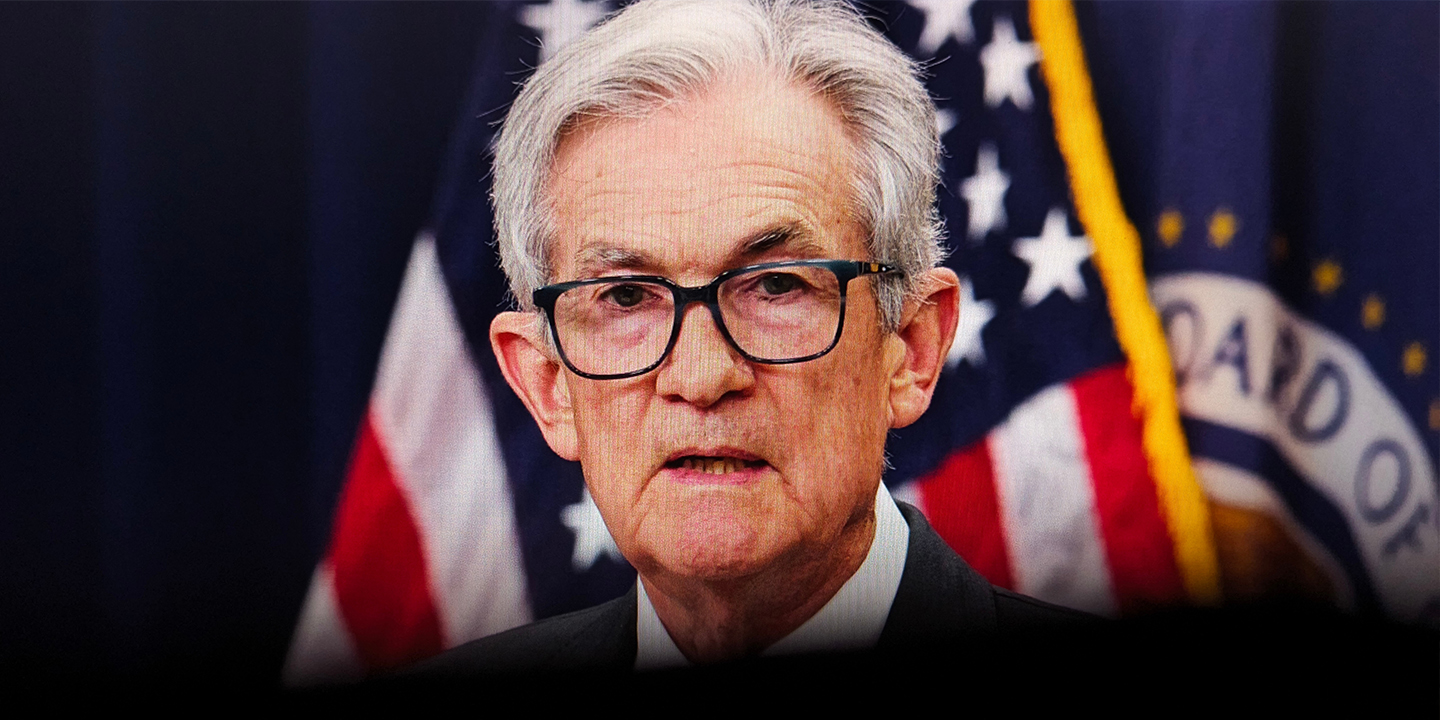
Who Could Replace Jay Powell as Fed Chair and What It Means for US Interest Rates
Key summary
- Jay Powell’s term as Chair of the US Federal Reserve ends in late May, ahead of the June FOMC meeting.
- Markets are focused on two leading contenders: Kevin Hassett and Kevin Warsh.
- Both candidates are highly qualified, but Warsh has prior experience as a Fed Governor, including during the Global Financial Crisis.
- Our Fed Funds rate model explains around 90% of the monthly variation in the policy rate.
- While a January rate cut looks unlikely, further easing is expected later in 2026 as US employment growth weakens.
Why the Fed Chair succession matters
The Chair of the Federal Reserve is one of the most powerful economic roles in the world. Decisions made by the Fed shape global interest rates, asset valuations and financial stability.
With Jay Powell’s term ending in May, the US President will need to nominate a successor ahead of the June 16 to 17 FOMC meeting, with confirmation required from the US Senate. That timeline has brought renewed attention to the potential direction of US monetary policy over the next year.
Powell leaves behind a strong reputation. He is widely regarded as an excellent Chair, highly credible, a skilled consensus manager, and well respected by other central bankers. Market participants and policymakers who have dealt with him consistently describe him as pragmatic, measured and effective under pressure.
The two leading contenders
Media coverage and betting markets currently point to two frontrunners: Kevin Hassett and Kevin Warsh.
Both are highly capable candidates, but their professional backgrounds differ in ways that matter for monetary policy.
Kevin Hassett: senior economic policy experience
Kevin Hassett was born in 1963 and grew up in Greenfield, Massachusetts. He studied economics throughout his academic career, earning an undergraduate degree in Pennsylvania before completing a PhD at the University of Pennsylvania.
Hassett has also been influential outside academia. His 1999 book Dow 36,000 argued that equity markets would rise substantially over the long term and became a major bestseller.
Many investors first encountered Hassett while he served as Chair of the Council of Economic Advisers during Donald Trump’s first term. In early 2018, he appeared before the American Economic Association and debated Jason Furman, the former Chair of the Council under President Obama.
Today, Hassett holds an even more senior role. He is Director of the National Economic Council of the United States in the current administration, a position with Cabinet level status. In practical terms, he briefs the US Cabinet on economic conditions and policy developments, making him one of the most influential economists in American policy circles.
Kevin Warsh: deep Fed and markets experience
Kevin Warsh was born on 13 April 1970 in Albany, New York, the state capital.
Rather than following the traditional East Coast academic pathway, Warsh studied at Stanford University, earning a degree in public policy. He then returned east to complete Harvard Law School, graduating in 1995, before continuing his studies at Harvard Business School and MIT, focusing on economics and public policy.
That academic background led him to Morgan Stanley in 1995, where he rose to Executive Director by 2002.
Warsh entered public service during the George W. Bush administration, serving as Executive Secretary of the National Economic Council. In February 2006, he was appointed a Governor of the Federal Reserve, beginning a 14 year term and becoming the youngest Fed Governor in history, at just 35.
Warsh and the Global Financial Crisis
Warsh’s time at the Fed coincided with the Global Financial Crisis, when he served alongside then Chair Ben Bernanke.
Bernanke later noted that Warsh’s deep knowledge of Wall Street and extensive industry contacts were invaluable during the crisis, helping policymakers navigate a collapsing financial system.
One of the most influential speeches of that period was delivered by Warsh in New York on 14 April 2009. In it, he described how liquidity, long taken for granted by large financial institutions, suddenly vanished.
He famously compared institutions to fish swimming in water:
“Fish don’t know they are wet, and they won’t learn until the water is gone.”
The speech captured the psychological shock of the crisis, not just the economic one. Alongside Raghuram Rajan’s 2005 Jackson Hole speech, which correctly warned that financial innovation and asset backed securities would lead to instability, Warsh’s remarks remain among the most important documents for understanding the crisis.
Who is more likely to become Fed Chair?
While both candidates are strong, Kevin Warsh now appears to be narrowly leading in betting markets.
The distinction between the two is clear:
- Warsh has served as a Federal Reserve Governor.
- Hassett has not.
That experience gives Warsh a deeper understanding of financial markets, crisis dynamics and the internal workings of the Fed. In my view, if appointed, Warsh would be an outstanding Chair.
What the Fed Funds model is signalling
Our Fed Funds rate model explains roughly 90% of the monthly variation in the policy rate over time, making it a useful guide to current policy settings.
The key issue confronting the Fed in 2026 is employment growth.
Jay Powell has already flagged this risk publicly, noting at Jackson Hole that US employment growth has begun to slow sharply. Recent data show payroll growth running at just 0.4 percent, only marginally positive and historically consistent with late cycle risk.
January decision and outlook for 2026
Despite the slowing labour market, our model currently estimates the equilibrium Fed Funds rate at around 3.49 percent, compared with an effective rate near 3.6 percent.
That suggests:
- A rate cut at the January meeting is unlikely.
- Policy remains slightly restrictive but not dramatically so.
However, the bigger picture matters. If employment growth continues to decelerate, as recent trends suggest, the equilibrium rate will fall further.
In that scenario, the Fed will need to deliver additional rate cuts later in 2026 to generate genuine stimulus and support the US economy.
FAQs
When does Jay Powell’s term as Fed Chair end?
Jay Powell’s term ends in late May, ahead of the June FOMC meeting.
Who are the leading candidates to replace him?
The two leading contenders are Kevin Hassett and Kevin Warsh.
Why does Kevin Warsh have an advantage?
Warsh has prior experience as a Federal Reserve Governor, including during the Global Financial Crisis.
Is a January rate cut likely?
Based on current data and model estimates, a January cut appears unlikely.
Will the Fed cut rates later in 2026?
Yes. Continued slowing in US employment growth suggests further rate cuts are likely as the year progresses.
Conclusion and next steps
The impending change at the top of the Federal Reserve comes at a delicate moment for the US economy. Slowing employment growth and late cycle dynamics point toward an easing bias, regardless of who ultimately takes the Chair role.
While the Fed may remain on hold in the near term, the direction of travel is clear. Monetary policy is likely to become more accommodative through 2026.
Want to discuss how this impacts your portfolio?
DISCLAIMER: Information is of a general nature only. Before making any financial decisions, you should consult with an experienced professional to obtain advice specific to your circumstances.
.jpg)
.jpg)